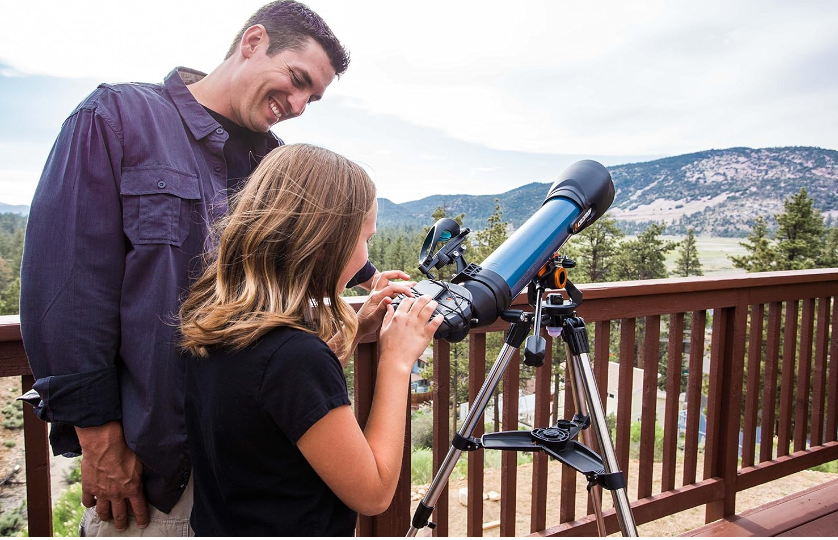
Looking for the best telescopes for beginners? If yes, then you are in the right place. Read on; this post is for you.
Whether you’re fascinated by distant galaxies, the craters on the Moon, or the rings of Saturn, starting with a telescope that’s easy to use, reliable, and suited to your interests will set you up for a rewarding stargazing experience. This guide will walk you through everything you need to know to select a beginner-friendly telescope that brings the wonders of the cosmos right to your backyard.
Why Choosing the Right Beginner Telescope Matters
Choosing the right telescope as a beginner is crucial because it can make or break your stargazing experience. A telescope that is too complex or difficult to set up can be frustrating, discouraging you from exploring the night sky further.
On the other hand, a beginner-friendly telescope with the right balance of features provides stunning views and makes learning astronomy enjoyable. Additionally, starting with the right telescope helps you build confidence, develop your skills, and foster a lasting curiosity about the universe.
Differences Between Beginner and Advanced Telescopes
Beginner telescopes vary in features and performance compared with advanced telescopes. The key differences include:
- Ease of Use
- Beginner: Simple setup with intuitive controls, ideal for first-time users
- Advanced: More complex assembly and operation, often requiring experience
- Optical Quality
- Beginner: These telescopes have basic optics for viewing the Moon, planets, and brighter deep‑sky objects.
- Advanced: Higher‑quality optics with better clarity and contrast for detailed deep‑space observation.
- Aperture Size
- Beginner: The aperture size is usually smaller up to ~6″, balancing performance and portability.
- Advanced: These telescopes have larger apertures (>6″) to gather more light for fainter objects.
- Mount and Stability
- Beginner: With mount and stability, the best telescopes for beginners feature basic, lightweight, and easy-to-use mounts, often Altazimuth.
- Advanced: These telescopes have more stable and precise mounts, such as Equatorial or motorized, for tracking and astrophotography
- Features and Accessories
- Beginner: Regarding features and accessories, beginner-friendly telescopes often include essential accessories and minimal extras to avoid confusion.
- Advanced: Many models offer advanced features like computerized tracking, GPS, and multiple eyepieces.
Types of Telescopes for Beginners
There are three main types of telescopes for beginners: Refractor, reflector, and catadioptric.
- Refractor Telescopes. Refractors use lenses to produce clear, sharp views of the Moon, planets, and nearby stars. They are easy to set up, low-maintenance, and ideal for beginners, though larger apertures can be expensive.
- Reflector Telescopes. This type of telescope uses mirrors to gather more light, making it great for faint deep-sky objects like nebulae and galaxies. They are affordable but require occasional mirror alignment/collimation
- Catadioptric Telescopes. Catadioptric telescopes, on the other hand, combine lenses and mirrors in a compact, versatile design. They work well for both planetary and deep-sky viewing and often include tracking features. Besides, they are portable, though usually pricier than other types.
Best Telescopes for Beginners
1.Celestron NexStar 4SE Computerized Telescope
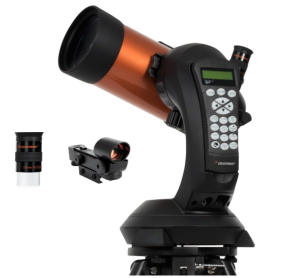
The Celestron NexStar 4SE is the best telescope for beginners. It pairs Celestron’s legendary orange tube with a fully computerized GoTo system to meet the needs of those ready to step up from manual scopes and explore more of the night sky with precision and ease.
The selling point of this telescope is its 4-inch (102mm) aperture. Together with the Schmidt-Cassegrain design, it allows for clear, sharp views of the moon, planets, and some deep-sky objects.
Furthermore, the telescope’s computerized GoTo mount simplifies locating celestial objects, with a database of over 40,000 stars, planets, and galaxies. Setup is straightforward, and its single-arm alt-azimuth mount provides smooth tracking of objects across the night sky.
Despite its small size, the optical quality is excellent, delivering bright and detailed images that rival larger, more cumbersome telescopes. Besides, it is relatively lightweight and easy to transport to dark-sky locations, and the built-in SkyAlign technology allows for quick alignment without complicated calculations.
Above all, the telescope supports optional astrophotography for lunar and planetary observation.
Features
- StarBright XLT high transmission coating
- Sturdy computerized altazimuth mount
- Nearly 40,000 object database with 200 user-definable objects
- GPS-compatible with optional CN16 GPS accessory
- DC Servo motors with encoders on both axes
Pros
- Compact and lightweight, easy to transport
- Computerized GoTo mount with 40,000+ object database
- SkyAlign technology for quick and accurate setup
- Excellent optical quality for lunar and planetary viewing
- User-friendly interface suitable for beginners
Cons
- Limited deep-sky viewing and astrophotography capabilities
2.Sky-Watcher Heritage 150 Tabletop Dobsonian Telescope
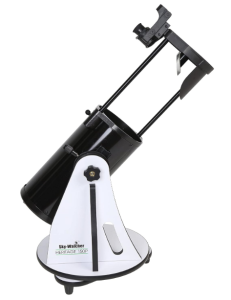
The Sky-Watcher Heritage 150 Tabletop Dobsonian Telescope is an excellent choice for astronomy beginners. It provides a bright, bold viewing experience at a fraction of the cost of other optical designs.
Featuring a massive 150mm aperture, this telescope delivers impressive light-gathering capabilities, allowing clear views of the Moon, planets, and even brighter deep-sky objects such as star clusters and nebulae.
Despite its small footprint, the telescope provides smooth, stable movement. making it simple for new users to track celestial objects without frustration. Additionally, its intuitive design minimizes the learning curve for novice astronomers, while the tabletop Dobsonian design makes it compact and highly portable.
Another notable feature of the Heritage 150 is its versatility. The telescope comes with two eyepieces, providing options for different magnifications, and the wide 150mm mirror ensures bright, crisp images even under moderately light-polluted skies.
It also comes complete with multiple accessories, such as a 2-inch Crayford-style focuser with 1 1/4-inch adapter, two super wide-angle eyepieces (25mm and 10mm), and a 9×50 straight-through finder scope.
Features
- Fully multi-coated borosilicate primary and secondary mirrors
- Large 150mm aperture
- Proprietary tension control handles
- Teflon bearings to ensure smooth azimuth movement
Pros
- Bright, detailed views
- Compact and portable tabletop design
- Easy-to-use Dobsonian mount
- Comes with two eyepieces for multiple magnifications
- Quick setup and beginner-friendly
Cons
- Limited field of view for very deep-sky observing
3.Unistellar eVscope Equinox
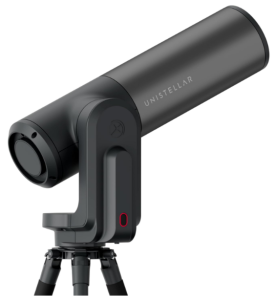
As one of the best telescopes for beginners, the Unistellar eVscope Equinox (Equinox 2) represents a significant advancement in consumer astronomy, combining state-of-the-art optics with user-friendly digital features.
Designed as a smart digital refractor telescope, it allows both beginners and seasoned stargazers to explore the night sky with unprecedented ease.
Furthermore, its compact 114mm aperture and advanced optical design deliver bright, crisp images of celestial objects, while the integrated sensor and digital enhancement system amplify faint details, making nebulae, galaxies, and star clusters more visible than ever.
Another feature that sets the Equinox 2 apart is its guided observation mode, where the telescope automatically locates and tracks thousands of objects, eliminating the usual frustration of manual alignment. The companion mobile app offers real-time overlays, astrophotography capabilities, and collaborative skywatching with other users, effectively turning stargazing into a highly interactive and social experience.
Beyond its technological innovations, the Unistellar eVscope Equinox emphasizes convenience and accessibility. The telescope is lightweight, easy to set up, and doesn’t require complicated calibration or external power sources beyond a rechargeable battery.
Above all, the device’s firmware updates and cloud-based software ensure that its features continue to evolve, keeping the telescope relevant for years.
Features
- 2 Mpx image resolution
- 450 mm focal length
- 34 x 47 Arcmin field of view
- Straight-Through finder scope
Pros
- Smart automatic tracking of thousands of celestial objects
- Bright, detailed images with enhanced digital optics
- Mobile app integration for real-time overlays and astrophotography
- Lightweight and portable design with easy setup
- Continuous firmware updates and cloud-based features
- Collaborative stargazing capabilities
Cons
- Higher price point compared to traditional telescopes
- Dependent on battery life for extended sessions
4.Celestron Inspire 100AZ Refractor Telescope
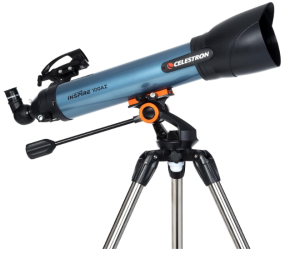
The Celestron Inspire 100AZ Refractor Telescope is a fantastic choice for beginners and casual stargazers looking for a portable yet capable telescope.
With its 100mm aperture, it gathers plenty of light to provide bright, clear views of the Moon, planets, and even some brighter deep-sky objects like star clusters and nebulae.
The refractor design ensures crisp, high-contrast images, while the alt-azimuth mount makes navigation intuitive, allowing you to move the telescope up, down, left, and right without complicated setups.
Another impressive feature is the built-in smartphone adapter. It makes it easy to capture stunning photos of celestial objects directly through your phone, making your stargazing sessions interactive and shareable. Furthermore, the telescope is surprisingly lightweight and easy to assemble, which is ideal for younger users or those who want a quick setup without fuss.
During use, the Inspire 100AZ performs exceptionally well under dark skies, delivering sharp planetary details and impressive lunar views. The included eyepieces provide a decent range of magnification options, though the true potential shines when combined with additional Celestron eyepieces or filters.
Features
- Refractor optical design
- Large 100mm aperture
- Two eyepieces (20mm and 10mm)
- Erect image star diagonal
- Finderscope and an integrated smartphone adapter
Pros
- Bright 100mm aperture for clear, detailed views
- Built-in smartphone adapter for easy astrophotography
- User-friendly alt-azimuth mount
- Lightweight and portable
- Simple assembly, great for beginners
Cons
- Limited deep-sky viewing compared to larger telescopes
5.Celestron StarSense Explorer DX 130AZ Telescope
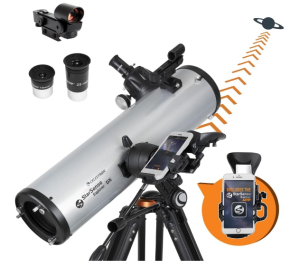
Next, we have the Celestron StarSense Explorer DX 130AZ App-Enabled Telescope. This is an impressive entry-level option for amateur astronomers who want a blend of traditional optical performance and modern smart technology.
The telescope features a 130mm aperture, which allows for clear and bright views of the Moon, planets, and some deep-sky objects like star clusters and nebulae. The optics are sharp, and the alt-azimuth mount makes it simple to adjust for smooth tracking.
What sets it apart is the StarSense technology. This technology pairs with your smartphone to help you identify and locate thousands of celestial objects automatically. As a result, it makes stargazing less intimidating for beginners while providing a more interactive and educational experience.
For added convenience, the telescope is easy to assemble and lightweight enough to carry to different observation sites. Furthermore, the tripod is sturdy, providing stable views even at higher magnifications, and the included eyepieces offer decent versatility for exploring both wide and narrow fields of view.
Features
- 5″ Newtonian reflector with high-reflectivity coatings
- Manual altazimuth mount with dual-axis slow-motion controls
- Two eyepieces (10mm and 25mm)
- Red dot finderscope
- StarSense technology
Pros
- User-friendly and beginner-friendly setup
- StarSense app integration for guided sky exploration
- 130mm aperture offers bright and clear views
- Lightweight and portable
- Stable alt-azimuth mount for smooth movement
Cons
- Requires a smartphone for full StarSense functionality
6.Gskyer Telescope Astronomical Refracting Telescope
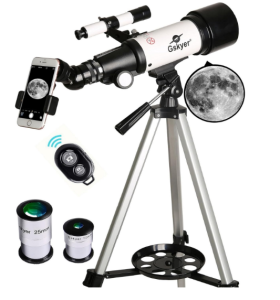
The Gskyer Telescope, 70mm Aperture 400mm AZ Mount Astronomical Refracting Telescope is a beginner-friendly telescope ideal for kids and newcomers to astronomy.
Its 70mm aperture and 400mm focal length provide clear and bright images of the moon, planets, and some of the brighter deep-sky objects. Furthermore, the telescope comes with an altazimuth (AZ) mount that is simple to use, allowing smooth vertical and horizontal adjustments.
Its lightweight and portable design means it can be easily moved outdoors for stargazing sessions without hassle. Besides, the setup process is straightforward, requiring minimal assembly, which is perfect for young users who are just starting to explore the night sky.
In addition to its user-friendly design, this Gskyer telescope includes multiple eyepieces that offer different magnifications, enhancing the viewing experience for a variety of celestial objects.
The telescope also comes with a finder scope, making it easier to locate stars, planets, and other objects.
Features
- 70mm aperture
- Fully coated optics
- 400mm(f/5.7) focal length
- Wireless remote camera
- 3x Barlow lens
Pros
- Easy-to-use altazimuth mount
- Lightweight and portable
- Clear and bright images of the moon and planets
- Multiple eyepieces for varying magnification
- Simple setup suitable for kids and beginners
- Durable design
Cons
- Limited aperture for deep-sky objects viewing
7.NASA Lunar Telescope for Kids
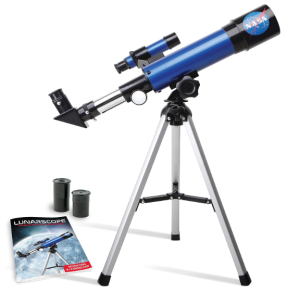
Last but not least, we have the NASA Lunar Telescope for Kids.
Designed with beginners in mind, this telescope offers up to 90x magnification, making it easy for kids to observe the Moon, planets, and some of the brighter celestial objects.
Its lightweight and compact design allows for easy portability, whether for backyard stargazing or taking on a family camping trip. The telescope also comes with a sturdy tripod and adjustable mounting, which helps stabilize the view and provides a comfortable observing experience for children.
Another feature that makes it one of the best telescopes for beginners is the intuitive design. Together with the included user-friendly guide, it makes it simple for kids to set up and start exploring the night sky without feeling overwhelmed.
Moreover, the telescope delivers surprisingly clear views for its size and price range to inspire curiosity among girls and boys interested in space, the moon, and astronomy.
Features
- High-quality optical glass
- Finder scope
- Low and high-power eyepieces
- Smooth mounting system
Pros
- Up to 90x magnification for detailed lunar views
- Lightweight and portable, easy for kids to handle
- Comes with a tripod and adjustable mount for stability
- Beginner-friendly with simple setup and guide
- Affordable introduction to astronomy
Cons
- Limited performance on faint deep-sky objects
Read Also:
Key Factors to Consider when Choosing the Best Telescopes for Beginners
Type of Telescope
One of the first key factors to consider is the type of telescope. There are three main types: refractor, reflector, and compound (or catadioptric). Refractors are generally low-maintenance and great for viewing planets and the Moon, while reflectors often offer larger apertures at lower prices, making them ideal for deep-sky objects like galaxies and nebulae. Compound telescopes combine features of both, providing versatility but often at a higher cost.
Aperture Size
Another critical factor is the aperture size, which is the diameter of the telescope’s main lens or mirror. Aperture determines how much light the telescope can gather, which directly affects the clarity and brightness of the objects you can observe. Beginners should aim for an aperture of at least 70mm for refractors or 100mm for reflectors to get a satisfying experience without overwhelming complexity.
Focal Length and Magnification
Next, the focal length and magnification are also important to keep in mind. A longer focal length provides higher magnification, making it suitable for detailed views of planets, whereas a shorter focal length offers a wider field of view, ideal for observing star clusters or the Milky Way. However, magnification alone is not the most crucial factor; beginners should prioritize optics quality and stability over extreme zoom.
Mount Type and Stability
Furthermore, mount type and stability play a vital role in how enjoyable your stargazing experience will be. The best telescopes for beginners come with alt-azimuth mounts, which move up-down and left-right, or equatorial mounts that track celestial objects more precisely. Beginners often benefit from a sturdy, easy-to-use mount that keeps the telescope steady during observations and reduces the frustration of constant adjustments.
Portability
Another key factor to consider is portability, especially if you plan to travel to dark-sky locations. A large telescope may offer better views, but it can be cumbersome to transport and set up. Compact and lightweight models are easier to handle and encourage more frequent use, which is essential for building skill and confidence.
Ease of Assembly and Use
Ease of assembly and use are also crucial to consider. The best telescopes for beginners are nearly plug-and-play, while others require more complex setup and alignment. A user-friendly telescope with clear instructions, minimal tools, and simple adjustments ensures that beginners spend more time observing rather than struggling with complicated assembly or calibration.
Budget
Lastly, consider your budget and future upgrade potential. While it’s tempting to go for the cheapest option, investing in a quality beginner telescope can save frustration and allow you to explore more advanced objects over time. Look for telescopes that offer upgradeable eyepieces, mounts, or accessories so that your equipment can grow with your skills instead of becoming obsolete quickly.
Best Telescopes for Beginners: Care and Maintenance Tips
By following these simple care and maintenance tips, you will keep your telescopes in top condition, ensure clearer views, and have a longer-lasting stargazing experience.
- Handle optics carefully. Avoid touching lenses or mirrors; use a soft cloth or lens cleaning kit for cleaning.
- Protect from dust and moisture. Always use dust caps and covers when the telescope is not in use.
- Store in a safe, dry place. Keep the telescope in a stable environment to prevent mold, moisture damage, or accidental bumps.
- Check and maintain mechanical parts. Furthermore, tighten screws, bolts, and lubricate moving parts as recommended for smooth mount operation.
- Take care of accessories. Store eyepieces, finderscopes, and other components separately to avoid scratches and loss.
Best Telescopes for Beginners FAQs
- What is the best type of telescope for beginners?
For most beginners, refractor telescopes are the easiest to use because they require minimal maintenance and are great for viewing the Moon and planets. However, if you’re interested in deep-sky objects, a reflector telescope with a larger aperture provides better views at an affordable price.
- How important is aperture for a beginner telescope?
Aperture is very important because it determines how much light your telescope gathers. For beginners, an aperture of at least 70mm for refractors or 100mm for reflectors is recommended to see planets, star clusters, and brighter nebulae clearly.
- How much should I spend on a beginner telescope?
A good beginner telescope can range from $100–$500. Avoid very cheap models with poor optics, and instead focus on quality, ease of use, and upgrade potential.
Conclusion
Selecting a beginner telescope is about finding a balance between performance and ease of use. The right telescope will allow you to explore the Moon, planets, and brighter deep-sky objects without causing frustration from complicated setup or poor optics. Focus on a sturdy mount, a decent aperture, and portability to develop your skills and expand your stargazing adventures over time.