

Exploring the wild on safari is an unforgettable experience, and having the best binoculars for safari makes it even more remarkable.
Whether you’re scanning the horizon for elephants at a watering hole, tracking a pride of lions through tall grass, or birdwatching in lush riverine forests, high-quality binoculars bring the incredible wildlife up close with clarity and detail. This guide breaks down what matters most when selecting binoculars for a safari adventure and highlights some of the best options for every budget to help you choose a pair that makes each adventure count.
Why Binocular Quality Matters on Safari
Investing in a quality pair of safari binoculars matters for the following reasons:
- Clearer Wildlife Viewing. Binoculars with high-quality optics deliver sharp, bright images, allowing you to see fine details like fur patterns, horn shapes, and facial features even at a distance.
- Better Low-Light Performance. Early mornings and late afternoons are prime wildlife viewing times. Premium binoculars gather more light, making animals easier to spot during dawn and dusk.
- Improved Color Accuracy. Furthermore, good glass and coatings provide true-to-life colors, helping you distinguish animals from dry grass, shadows, or dense vegetation.
- Wider Field of View. The best binoculars for safari often offer a broad viewing area, making it easier to track moving animals or scan open savannah landscapes.
- Reduced Eye Strain. Additionally, superior lenses and proper alignment reduce distortion and eye fatigue, which is important during long game drives.
- Durability in Harsh Conditions. Safaris often involve dust, heat, and occasional rain. Well-built binoculars are waterproof, fog-proof, and shock-resistant.
- Faster, Smoother Focusing. Lastly, a pair of safari binoculars with reliable focus mechanisms allows you to quickly adjust when animals move or when shifting between near and distant subjects.
How Better Optics Change Your Experience
A quality pair of safari binoculars will better your experience in these ways:
- Sharper Image Clarity. This reveals fine details like fur patterns, horn shapes, and facial features instead of distant blurry outlines.
- Brighter Views in Low Light. Binoculars with superior light transmission improve visibility during dawn and dusk when wildlife is most active.
- Enhanced Color Accuracy. Furthermore, the natural, vibrant colors help animals stand out from the grass, trees, and shadows. The improved contrast also makes it easier to distinguish wildlife from background terrain.
- Wider Field of View. This feature helps you scan open landscapes and track moving animals more efficiently.
- More Immersive Experience. Last but not least, quality optics make wildlife encounters feel closer, more detailed, and more memorable.
What Separates Premium vs Budget Binoculars
When choosing binoculars for safari, the most noticeable difference between premium and budget models is optical performance.
Premium binoculars use higher-quality glass and advanced lens coatings that produce sharper, brighter, and more detailed images, especially in low-light conditions like dawn and dusk, while budget options often deliver darker, softer views with lower contrast.
Another key distinction lies in build quality and durability: premium models are typically waterproof, fog-proof, and constructed from rugged materials built to withstand dust, heat, and rough handling, whereas budget binoculars may lack weather sealing and feel less sturdy over time.
Finally, comfort and usability set premium binoculars apart; they generally offer smoother, more precise focusing, better ergonomics, and more comfortable eye relief for extended viewing. As a result, they are easier and more enjoyable to use during long game drives compared to many entry-level alternatives.
8×42 vs 10×42 (Quick Decision Guide)
Both 8×42 and 10×42 binoculars are ideal for safari. They offer a wide field of view, which is essential for quick tracking of moving wildlife. Additionally, both binoculars are stable, easy to hold during long safari trips, and ideal for glassing in varying light conditions.
Choose 8×42 if you want easier tracking, steadier views, and wider scenes, as they are great for general safari game-watching. On the other hand, choose 10×42 if you want extra reach and detail for spotting distant wildlife or birds.
Best Binoculars for Safari
1.Nikon Monarch 7 8×42
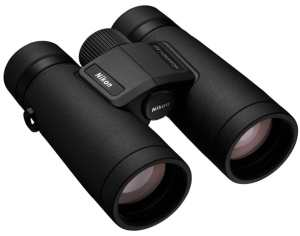
The Nikon Monarch 7 8×42 are the best binoculars for safari. They are a high-quality pair of binoculars that deliver impressive clarity, brightness, and comfort for long-duration viewing.
The selling point of this pair of binoculars is its build quality. The housing is solid but not overly heavy, with a rubber-armored exterior that’s easy to grip and feels durable against bumps and weather.
Furthermore, the optics deliver bright, sharp images with excellent contrast and natural color rendering. The 8x magnification hits a sweet spot for handheld use, offering enough reach without making the view too shaky. Besides, the wide 42 mm objective lenses capture plenty of light, keeping views bright even in lower lighting conditions.
Comfort and usability are excellent, with smooth, responsive focus and eyecups that twist easily for use with or without glasses. The Monarch 7 is also fully waterproof and fog-proof to give confidence in variable weather conditions.
Features
- Nikons legendary ED (Extra-low Dispersion) glass lenses
- Dielectric High-Reflective Multilayer Prism Coating
- Phase-correction coated prisms
- Smooth central focus knob
- Waterproof (up to 1m/3.3ft for 10 minutes) and nitrogen-purged
Pros
- Sharp, high-contrast optics with excellent edge-to-edge clarity
- Bright views in low light thanks to 42 mm objective lenses
- Comfortable, ergonomic design with easy focus adjustments
- Well-sealed waterproof/fog-proof construction
- Great balance of performance and price
Cons
- On the heavier side for very long hikes
2.Vortex Viper HD 8×42
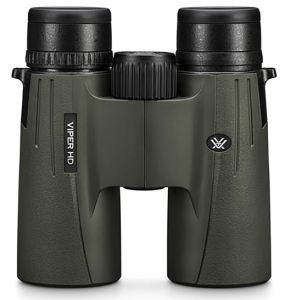
The Vortex Viper HD 8×42 is a premium mid-range binocular that delivers impressive optical performance in a rugged, field-ready design.
Built with high-density (HD) extra-low dispersion glass, it produces sharp images with excellent color fidelity and minimal chromatic aberration.
Furthermore, the 8x magnification strikes a practical balance between detail and stability, making it ideal for birdwatching, wildlife observation, and general outdoor use.
Optically, its 42mm objective lenses gather ample light for bright, clear views even during dawn and dusk, while fully multi-coated lenses and dielectric prism coatings enhance contrast and resolution.
Ergonomically, the Viper HD 8×42 feels solid yet comfortable in hand, thanks to its durable rubber-armored chassis and well-balanced weight. The binocular is also nitrogen-purged and O-ring sealed, ensuring waterproof and fog-proof performance in varying weather conditions.
To top it all off, the central focus wheel operates smoothly with precise control, and the adjustable eyecups accommodate both eyeglass wearers and non-eyeglass users.
Features
- Smooth central focus wheel
- Waterproof and fog-proof
- Premium anti-reflective coatings on all air-to-glass surfaces
- Rugged rubber armor
- BaK4 prisms
Pros
- Excellent HD glass clarity with minimal color fringing
- Bright, high-contrast image even in low light
- Wide field of view for tracking moving subjects
- Durable, waterproof, and fog-proof construction
- Smooth, precise focusing mechanism
- Comfortable grip with solid build quality
Cons
- More expensive than basic binocular models
3.Celestron Nature DX 8×42
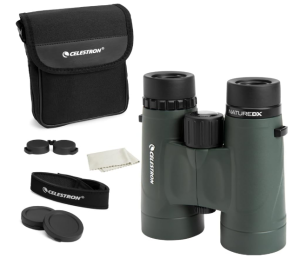
As one of the best binoculars for safari, the Celestron Nature DX 8×42 is a well-built mid-range pair of binoculars designed for birdwatching, outdoor exploration, and general nature observation.
Featuring 8× magnification and 42mm objective lenses, it strikes a good balance between image brightness and handheld stability, making it suitable for daylight and low-light outdoor viewing.
The optics use fully multi-coated lenses and phase-coated BaK-4 prisms, helping deliver clear, sharp images with good color fidelity and reduced edge distortion.
Furthermore, the rubber-armored body provides decent shock resistance and a comfortable grip during use. This pair of binoculars also withstands harsh weather thanks to the fully waterproof housing that is purged of air and filled with dry nitrogen gas.
Other handy features it is coupled with are twist-up eyecups and generous eye relief that make it friendly for eyeglass wearers, and a smooth and responsive focusing mechanism that allows users to lock onto subjects quickly.
Features
- Phase coated BaK-4 prisms
- Fully multi-coated optics
- Eyeglass friendly – generous eye relief and sturdy, twist-up eyecups with multiple stops
- 5ft close focus
- Accepts an optional tripod adapter for extended viewing sessions
Pros
- Lightweight and comfortable for extended outdoor use
- Fully multi-coated optics improve brightness and clarity
- Good color accuracy and sharp center image
- Durable, rubber-armored construction
- Suitable for beginners
Cons
- Poor edge sharpness at maximum field view
4.Vortex Diamondback HD 10×42
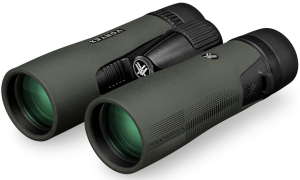
Built on the renowned Vortex reputation for quality optics, the Vortex Diamondback HD 10×42 is a popular mid-range binocular designed for outdoor enthusiasts who want reliable optical performance without paying premium prices.
These binoculars feature HD optical glass and fully multi-coated lenses that deliver sharp, bright, and color-accurate images in different lighting conditions, including early morning and late afternoon viewing.
Furthermore, the 10x magnification combined with a 42mm objective lens strikes a good balance between detail and light-gathering ability, making it suitable for birdwatching, wildlife observation, and general nature exploration, in addition to safari.
Moreover, these binoculars are nitrogen-purged and O-ring sealed. This guarantees resistance to fogging and moisture, which is helpful in humid or rainy environments. The rubber armor exterior also improves grip and provides basic shock protection when using the binoculars outdoors.
In terms of handling, the Diamondback HD 10×42 feels comfortable for extended use thanks to its ergonomic design and relatively lightweight construction. Additionally, the center focus wheel operates smoothly, allowing quick focus adjustments when tracking moving subjects.
Features
- Waterproof and argon gas purged
- HD optical system
- Multi-layer prism coatings
- Rugged rubber armor
- Central focus wheel
Pros
- Excellent HD optical clarity with good color fidelity
- Durable, weather-resistant construction
- Comfortable grip and ergonomic design
- Smooth and responsive focus mechanism
- Good value for mid-range pricing
Cons
- Slight edge distortion at maximum magnification
5.Nikon Monarch HG 8×42
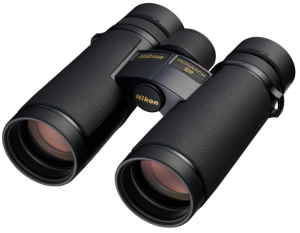
If you are looking to take your safari experience a notch higher, the Nikon Monarch HG 8×42 binoculars are your ideal companion.
These binoculars deliver an impressive combination of optical clarity, build quality, and comfortable handling that stands out in their price range. The views are bright and sharp, with excellent contrast and color accuracy that make landscapes, birds, and distant subjects feel vivid and natural.
Furthermore, the 8x magnification is strong enough to bring faraway details closer without making the image too shaky for most users. Besides, the 42 mm objective lenses gather plenty of light, so you can enjoy clear views even during early morning or late afternoon outings.
What’s more, the focus wheel is smooth and responsive, and the eyecups twist securely for comfortable viewing with or without glasses.
In terms of build and handling, the Monarch HG feels rugged and well-engineered without being overly heavy. The exterior grip is secure, and the overall ergonomics make them easy to hold steady for extended use.
Above all, the reliable waterproofing and fog resistance give confidence in wet or humid environments, while the protective lens coatings seem to resist smudges and scratches well.
Features
- Magnesium alloy body
- Wide available interpupillary distance adjustment
- Locking diopter
- Long eye relief and turn-and-slide eyecups
- 6 feet close minimum focus distance
- 3 degrees field of view
Pros
- Bright, clear image with excellent color and contrast
- Comfortable 8x magnification for steady handheld viewing
- Smooth focus mechanism and adjustable eyecups
- Solid build quality with good grip and durability
- Waterproof and fog-resistant design
Cons
- Higher price compared to basic binoculars
6.Vortex Razor HD 8×42
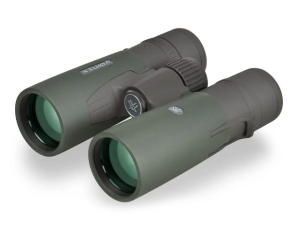
The Vortex Razor HD 8×42 is a premium compact binocular designed for users who want excellent optical clarity and reliable field performance.
Built with HD extra-low dispersion glass, this model delivers sharp, high-contrast images with minimal chromatic aberration, making it suitable for birdwatching, wildlife observation, and outdoor sports viewing.
The 8x magnification combined with a 42mm objective lens strikes a good balance between brightness and portability, allowing comfortable handheld use even during extended observation sessions.
Furthermore, its rugged magnesium chassis and durable rubber armor provide strong shock resistance while maintaining a lightweight feel for active outdoor use.
In addition to impressive build quality and optical performance, the Vortex Razor HD 8×42 offers enhanced low-light capability thanks to premium lens coatings that improve light transmission and color accuracy.
Above all, the ergonomic design ensures comfortable gripping, while the adjustable eyecups and smooth central focus wheel make focusing quick and precise.
Features
- XR Plus fully multi-coated lenses
- Fully waterproof and fog-proof
- BaK4 roof prism
- Matte finish
- Center focus system
Pros
- Outstanding HD optical clarity with high color fidelity
- Excellent low-light performance
- Durable magnesium body with weatherproof construction
- Comfortable ergonomic grip and smooth focusing mechanism
- Lightweight and travel-friendly design
Cons
- The field of view is slightly narrower than some competing models
7.Zeiss Conquest HD 8×42
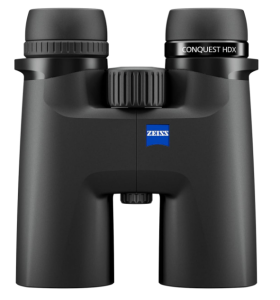
The Zeiss Conquest HD 8×42 is a premium binocular designed for users who want professional optical performance.
Built with advanced HD lens systems, this 8×42 configuration delivers bright, high-contrast images with excellent color fidelity and edge-to-edge clarity. Furthermore, the 42mm objective lenses gather ample light, making the binoculars highly effective in dawn, dusk, or shaded environments such as forests and valleys.
The 8x magnification strikes a good balance between image stability and detail recognition, allowing users to observe wildlife, landscapes, or sporting events comfortably, even without a tripod.
Regarding construction, the durable yet lightweight construction also makes it suitable for extended outdoor use, whether you are watching birds or wildlife.
In terms of user experience, the Conquest HD 8×42 features a smooth central focusing mechanism and ergonomic rubberized housing that improves grip and handling. These binoculars are also nitrogen-filled and fully waterproof to prevent internal fogging and ensure reliability in humid or rainy conditions.
Features
- LotuTec protective coating sheds water for all-weather use
- Protective and comfortable armoring
- Lightweight aluminum housing
- HD lens system & ED Glass for clear, natural colors
- Rotating lockable eye cups – adaptable for eyeglasses users
Pros
- Excellent HD optical clarity with high contrast and sharpness
- Good low-light performance for its class
- Brilliant close-focus abilities
- Great ease of use
- Comfortable ergonomics and stable 8x magnification
- Lightweight design for long outdoor observation sessions
Cons
- High price for casual beginners
8.Leica Noctivid 10×42
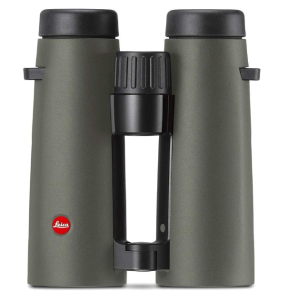
The Leica Noctivid 10×42 is our last recommendation for the best binoculars for safari.
As one of the most refined roof-prism binoculars you can own, blending precision engineering with remarkable optical performance, these binoculars are built to last. The magnesium chassis, rubber armoring, and a compact, balanced feel make them extremely durable and comfortable for long viewing sessions.
Furthermore, the 10×42 configuration hits a sweet spot between magnification and light-gathering ability, delivering bright, high-contrast views even in low-light conditions such as dawn or dusk.
Colors are vivid yet natural, and Leica’s advanced coatings keep stray light and flare to an absolute minimum, resulting in crisp details across the entire field of view. Moreover, the focus is smooth and precise, thanks to the finely tuned central focus wheel and diopter adjustment, which is especially handy when tracking birds or wildlife in motion.
Above all, these binoculars have a generous eye relief for eyeglass wearers and are designed to handle challenging lighting with confidence, even in misty or damp environments.
Features
- Magnesium housing
- Rubber armored body
- HDC Plus-multicoating, AquaDura lens coating
- Long 19mm eye relief
- Roof prism
Pros
- Exceptional optical clarity and color fidelity
- Bright, high-contrast views in varied lighting conditions
- Comfortable, balanced build suitable for extended use
- Excellent sharpness across the entire field of view
- Smooth, precise focusing mechanism
- Weather-sealed and durable construction
Cons
- Sits at a premium price
Read Also:
Criteria for Choosing the Best Binoculars for Safari
When choosing the best binoculars for safari, take into consideration the following factors:
Magnification Power
Firstly, consider magnification power. Safari environments often involve observing wildlife at varying distances, so a magnification of 8x to 10x is generally ideal. Higher magnification may seem attractive, but it can reduce image stability and make it harder to track moving animals without a tripod. A balanced magnification ensures clear, steady viewing while allowing you to enjoy animals in their natural behavior.
Objective Lens
The objective lens diameter determines how much light enters the binoculars, which directly affects brightness and clarity. For safari viewing, larger lenses such as 42mm or 50mm are preferable because wildlife is often observed during dawn, dusk, or under shaded vegetation. A wider lens gathers adequate light, producing sharper and brighter images in low-light conditions common in wildlife parks. However, larger lenses may slightly increase weight, so a balance between brightness and portability is essential.
Lens Coating
Next, lens quality coating is another critical criterion because it enhances contrast, reduces glare, and improves overall image quality. Fully multi-coated lenses are highly recommended for safari use since they help maintain color accuracy when viewing animals against bright skies or dense green backgrounds. Good coatings also improve durability by protecting the lens surface from dust and moisture encountered in outdoor environments.
Field of View
Furthermore, the field of view is important when watching moving animals such as herds or birds in flight. A wider field of view allows you to track animals easily without constantly adjusting your binoculars. Safari landscapes are dynamic, and animals can move quickly, so binoculars with a generous viewing width help you enjoy more action without losing sight of your subject.
Build Quality
Durability and weather resistance matter because safari adventures often involve unpredictable outdoor conditions. The best binoculars for safari should be waterproof and fog-proof to protect internal optics from humidity, rain, or dust. Rubber armor coating is also beneficial as it improves grip and helps absorb minor shocks during travel or field use.
Weight
Moreover, weight and portability should not be overlooked since safari trips usually involve walking long distances while carrying gear. Lightweight binoculars are more comfortable to hold for extended wildlife watching sessions. Compact designs are especially useful for travelers who want to move freely while exploring natural habitats.
Eye Relief
Finally, eye relief and comfort features are essential, particularly for users who wear glasses. The best binoculars for safari with long eye relief allow you to view full images without straining your eyes. Adjustable eyecups, smooth focus wheels, and a comfortable handling design also contribute to a more enjoyable safari viewing experience, making long wildlife observation sessions less tiring.
Best Binoculars for Safari FAQs
- What magnification is best for safari binoculars?
An 8x or 10x magnification is usually the best choice for safari wildlife viewing. These levels provide clear and stable images without excessive shaking, which is helpful when observing animals from a distance.
- Are waterproof binoculars necessary for safari?
Yes. Waterproof binoculars are highly recommended because safari environments may expose equipment to rain, humidity, dust, and morning dew. Waterproof and fog-proof designs help protect internal lenses and maintain image clarity during outdoor adventures.
- How much should I spend on safari binoculars?
The price depends on quality and features. Mid-range binoculars usually offer the best balance between performance and affordability. Very cheap models may compromise optical clarity, while extremely expensive ones may offer advanced features that casual safari travellers may not need.
Final Words
In summary, selecting the best binoculars for safari requires careful attention to optical performance, build quality, and user comfort. A good pair should provide clear and stable viewing while remaining durable enough for outdoor adventures. Prioritizing quality features over unnecessary extras is also crucial to ensure long-term satisfaction and better viewing experiences in the wild